The Laugavegur Trail is a moderate to challenging hike that calls for good walking endurance and comfort on uneven ground. Expect climbs, descents, and river crossings, along with weather that can turn wet, windy, and cold, even in summer.
Then you get up and do it all again the next morning. The best preparation is simple: spend full days on the trail carrying a daypack, whatever the weather. Laugavegur Trail difficulty varies with the itinerary you choose. Here’s how to assess the daily demands and prepare for them.
What a day on the Laugavegur involves
The classic route runs approximately 55 km (34 miles) from Landmannalaugar to Þórsmörk and is commonly walked over four days. These typical stages give you a sense of the commitment:
| Stage | Distance | Walking Time |
| Landmannalaugar – Hrafntinnusker | 12 km (7.5 mi) | 4-5 hours |
| Hrafntinnusker – Álftavatn | 12 km (7.5 mi) | 4-5 hours |
| Álfavatn – Emstur | 16 km (10 mi) | 6-7 hours |
| Emstur – Þórsmörk | 17 km (10.5 mi) | 6-7 hours |
Distances and times are approximate and vary with the route, conditions, and pace. Completing the trail in fewer days means combining stages. Fimmvörðuháls is a separate extension, with additional demands.
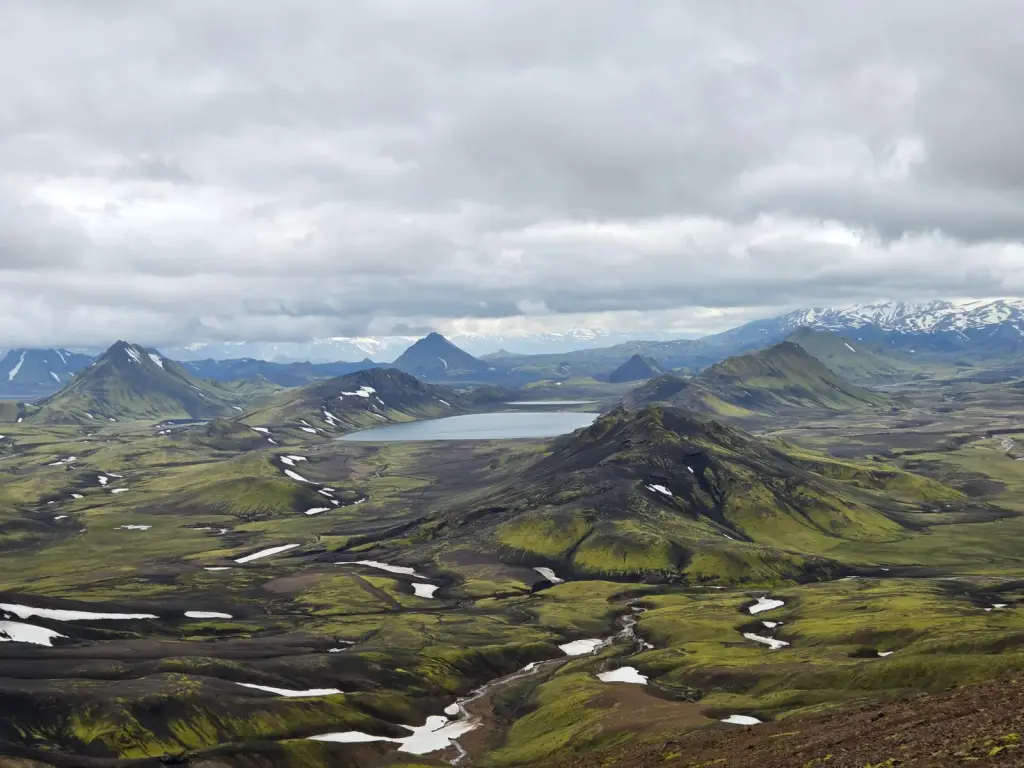
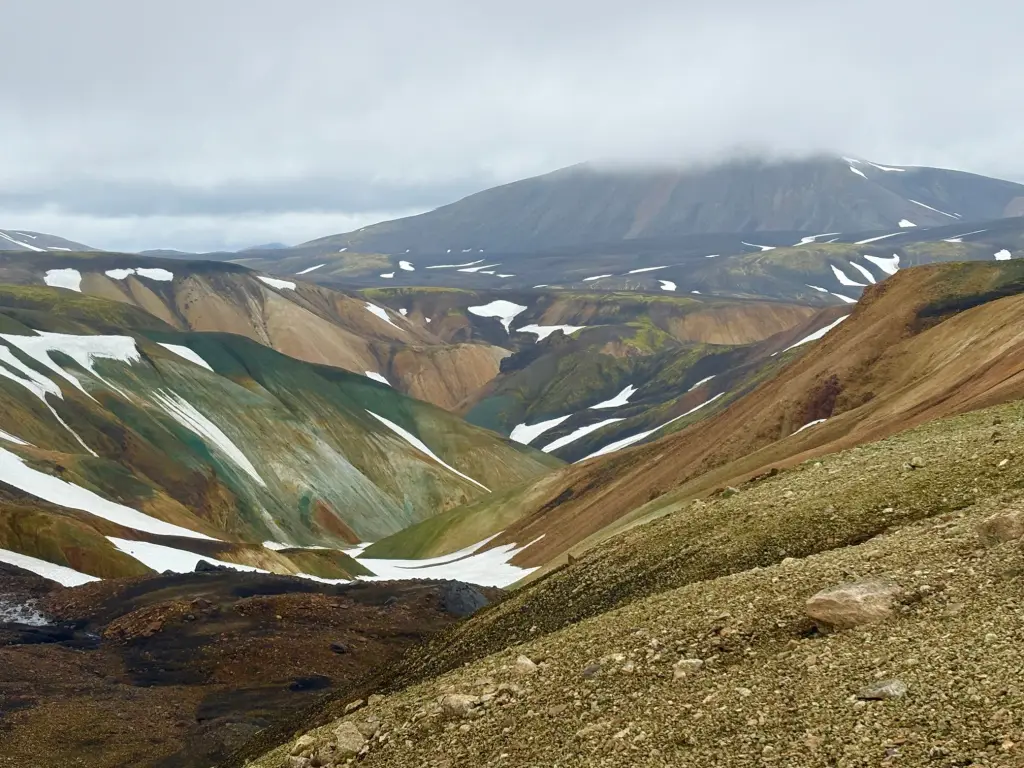
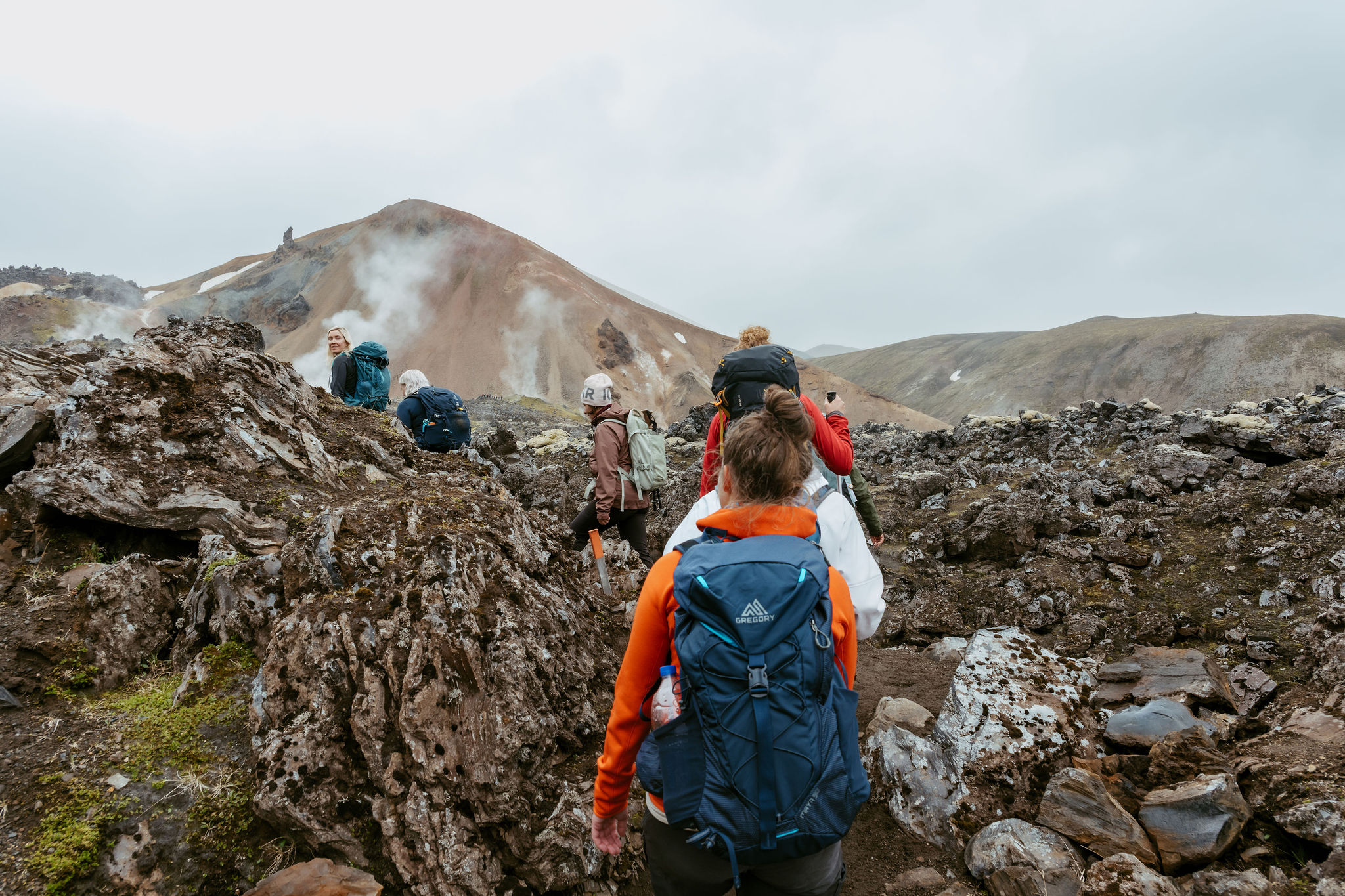
The first stage’s elevation gain is around 620-660 m (2,000-2,200 ft) with some descents along the way, as the trail rises and falls through the rhyolite hills. Later, the steep, rocky descent from Jökultungur toward Álftavatn demands careful footing. A downhill day still takes work as your legs have to control each step. Snow patches and loose surfaces can slow progress as well.
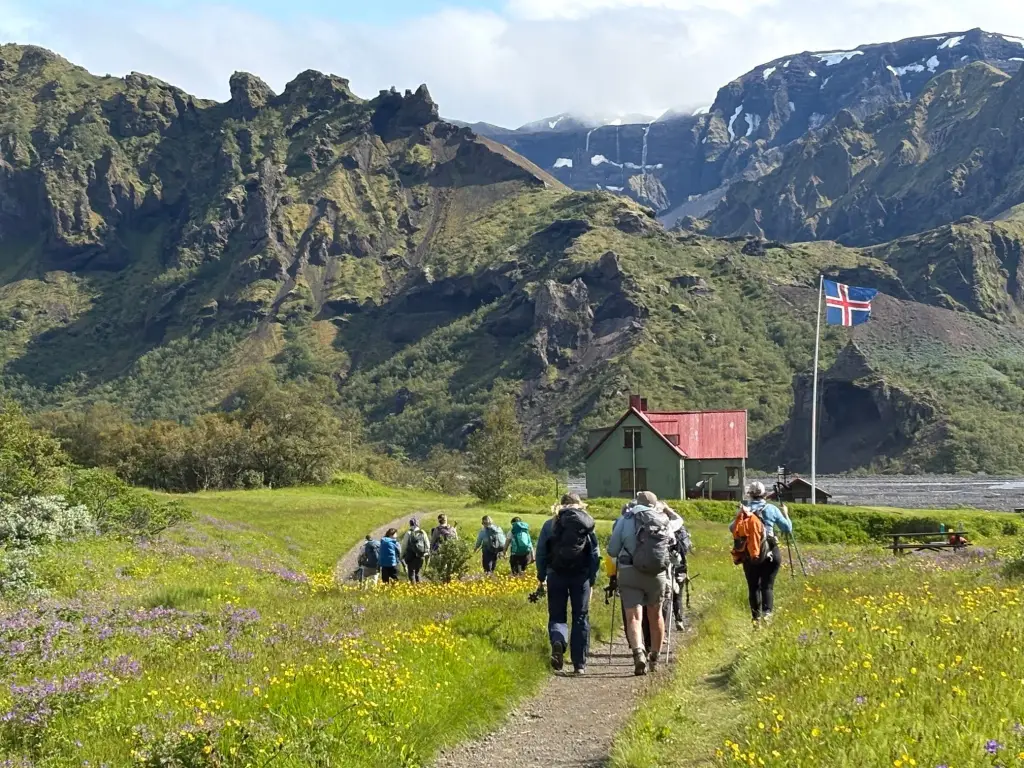
Up at Hrafntinnusker, the weather is a different story from Landmannalaugar. We’re close to the glaciers there, so it can be properly cold even in the middle of summer. Thick fog can also roll in and bring visibility down to almost nothing, and the trail markers you saw a minute ago simply disappear. Keep your warm layers where you can grab them fast, and don’t count on the morning’s weather lasting until you reach the hut.
How to judge whether you are ready
You don’t need a race time to describe your fitness. More useful questions are how long you can comfortably walk, what terrain you know, and how you feel afterward.
Someone who regularly completes hilly day hikes brings different preparation from someone whose walking is mostly on pavement. Gym sessions can build strength and endurance, but they don’t show you how your feet, balance, and shoulders respond to hours on a trail.
Before committing, consider your recent experience:
- Can you maintain a steady walking pace over hills and uneven ground without finishing completely exhausted?
- Can you descend with control, rather than rushing to get it over with?
- Is your pack comfortable during a long walk?
- After a demanding day outside, can you manage another walk the following morning?
These questions help identify gaps in preparation; they aren’t a pass-or-fail test. If you’re still building confidence, practice with longer day hikes or join one of our shorter multi-day hikes to get used to walking on consecutive days.
Prepare for the walking you will actually do
Build up gradually from walks you already manage comfortably. Extend your time outside, include hills, and practice descending as well as climbing. Choose uneven trails where available, so you get used to adjusting your stride and watching your footing.
As your preparation progresses, introduce walks on consecutive days. This gives you a chance to notice what needs attention before Iceland: uncomfortable boots, rubbing socks, a poorly adjusted pack, or a pace that leaves little energy for tomorrow.
Wear the footwear and carry the pack you intend to use. Start with a manageable load and build toward what your itinerary requires. Strength and balance work can support your walking, but leave time for recovery as you increase the demands.
We never recommend wearing brand new shoes. Before your hike, it is essential to feel good in the clothes you are going to wear.
Weather and river crossings need their own preparation
Strong fitness doesn’t remove the need for sound decisions. Wind and rain can make an exposed stretch harder, while fog can obscure trail markers. Conditions can change during the day, including in summer.
Carry appropriate waterproof layers and insulation, and check the forecast and local advice. If you’re hiking independently, make sure you have navigation equipment you know how to use. A marked route still requires preparation for poor visibility.

Unbridged river crossings add cold water, current, and uncertain footing. Ask local wardens about conditions and follow their advice. Bring suitable crossing footwear rather than planning to go barefoot. If a crossing is beyond your ability or conditions are unsafe, change the plan. Being willing to stop is part of good hiking judgment.
If you’re hiking with Viking Women, our local guides assess conditions along the way, help you navigate river crossings, and adjust plans when needed.
Your pack and overnight setup affect the effort
Camping means carrying shelter and sleeping equipment. A mountain hut removes the tent from that equation, but an independent hut trek can still involve carrying food, clothing, and a sleeping bag.
On our multi-day hiking tours, the main luggage and food boxes travel between huts while you hike with a daypack.
Find a group and itinerary that suit you
If you like to spend your days exploring on foot and your evenings sharing a meal with other women, join us on the Laugavegur Trail. Our local women guides lead the way, with mountain huts to sleep in and luggage transport so you can hike with a daypack.
Choose our Laugavegur Trail Classic tour for six days focused on the Highlands, including additional hiking in Þórsmörk. Or combine your trek with more of Iceland on our 10-day Laugavegur Trail, Golden Circle & South Coast tour.

Our guides set a pace that suits the group and keeps us on track with each day’s planned walking time. If you find you can’t keep up or can’t continue walking, you can ride with the luggage transport to the next hut. That ride can be fairly expensive, and the cost is yours to cover, so it’s worth being honest with yourself about your fitness before you book.
If you’re unsure which trip suits you, we’re happy to answer questions about the daily hikes, preparation, and what to expect.